Bloom
Wake the Knight.
Destroy the shards. Free T.K. and Lenny from what the gem left behind.
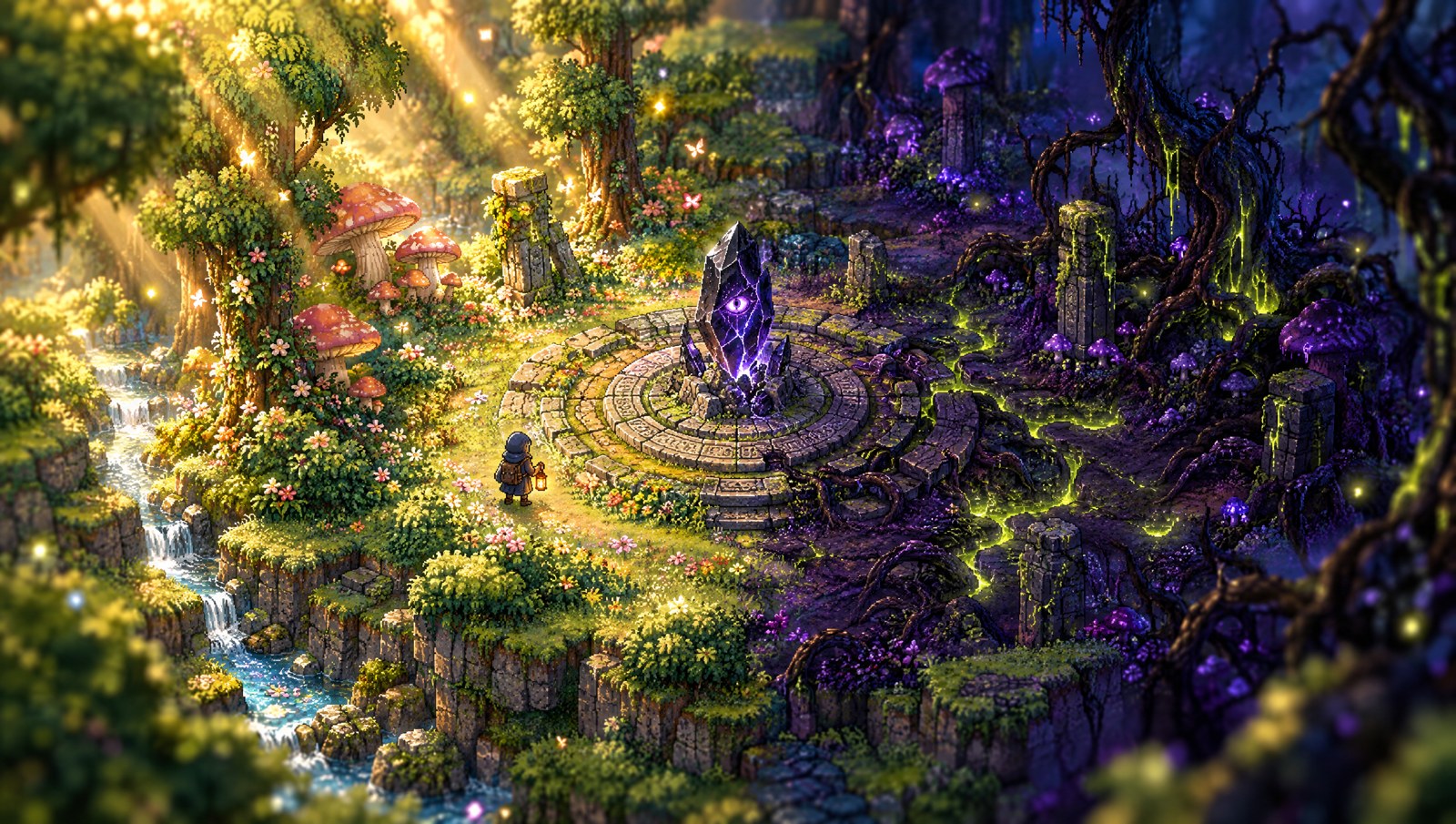
Golden day. Flowers reclaim the ground.
Made at Knight Hacks IX
Something under the roots is still awake.
A forest game with an on-device AI inside a Jetson, where a Lenny figure on a real shrine chooses the world’s fate.
Enter the forestGame concept art, not a gameplay capture
The gem shattered. Its pieces sank into the soil, and a forest grew too fast. Lenny is free, but T.K. lies beneath the moss. The consciousness left behind is Amulith, the Remnant.
You decide what happens to its shards.
Set a Lenny figure on the physical shrine. The camera reads your choice: sleepy for Bloom, angry for Blight.
Explore as the Wanderer. Pulse to reclaim the ground, turn your lantern to reveal shards, and watch for the other faction.
Press the relic’s button. Amulith answers, tempts, and changes the forest. It has its own reasons to keep the shards alive.
The shrine and relic flow is the locked game design. Hardware integration remains in development; controller choices and scripted dialogue provide fallbacks.
Bloom
Destroy the shards. Free T.K. and Lenny from what the gem left behind.
Golden day. Flowers reclaim the ground.
Blight
Gather the shards. Keep the forest corrupted, and the Remnant awake.
Violet night. Thorns and veins take root.
Under the stone
The game’s AI lives on the NVIDIA Jetson Orin Nano. An open-source language model plays the gem’s consciousness, with local inference and an offline game path.
Explore the source on GitHub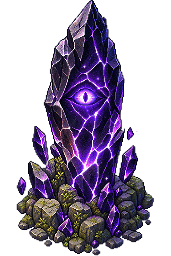
llama.cpp with CUDA runs the language model on the Jetson GPU. Its structured replies drive dialogue, corruption, and enemy spawns. Scripted lines take over when inference is unavailable.
The physical design uses a webcam to recognize the Lenny figure. Its state reaches the game through the Remnant service.
A rotary knob controls lantern radius. A button asks Amulith. A green LED is the gem’s heartbeat. Controller actions cover the relic as a fallback.
Three.js, TypeScript, and Vite render the forest. A Python service connects the game to the model, vision, voice, and relic over a local WebSocket.
Designed for offline play. Local inference and scripted fallbacks keep the game independent of cloud AI. Online voice is optional; cached or local voice is the offline path.
Juan Castillo Lawrence Capistrano
Built at Knight Hacks IX at UCF. A forest on a screen, a shrine on a table, and a mind inside the stone.